PODCAST FEATURE: Building AI Infrastructure for Drug Discovery: Aber Whitcomb on Advancing Health Innovation

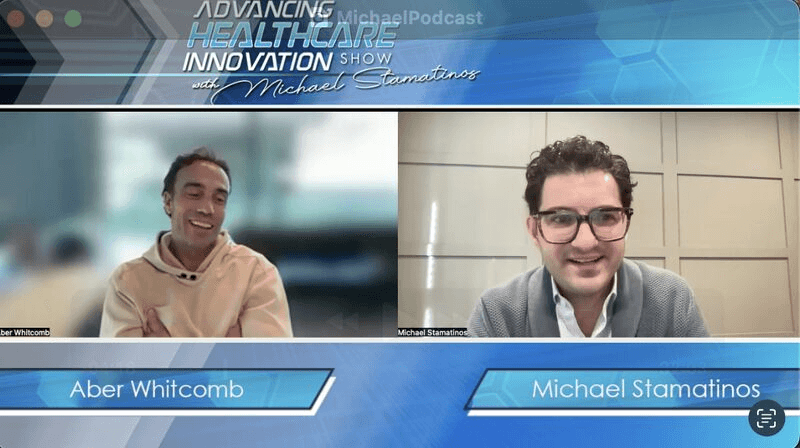
In this episode of Advancing Health Innovation, Aber Whitcomb (CEO of Salt AI) discusses the urgent need for “hardcore engineering” in life sciences. Drawing on his experience scaling MySpace and now leading Salt AI, he explains how decentralized AI infrastructure can shorten drug discovery timelines by 10x while preserving complete data sovereignty.
Key Takeaways: Salt AI on the Future of Biotech
Engineering Gap: Bringing Tier-1 AI talent into life sciences.
The “10x” Goal: Accelerating de novo molecule and protein design.
Data Sovereignty: Deploying AI behind the firewall to secure IP.
Scalability: Building infrastructure to handle exponential growth in biological data.
Why Life Sciences Needs Hardcore AI Engineering
Whitcomb notes that healthcare and biotech haven’t attracted the same level of AI engineering as other sectors.
“AI is being built by hardcore engineers—people who code. Naturally, a lot of AI goes into areas engineers know best, like coding. Healthcare and life sciences are a tick behind that innovation.”
This gap creates both a challenge and an opportunity—one Salt AI was built to close by bringing elite engineering into a mission-critical industry.
Accelerating Drug Discovery
Success for Salt, Whitcomb says, is measured in clinical outcomes, not just metrics.
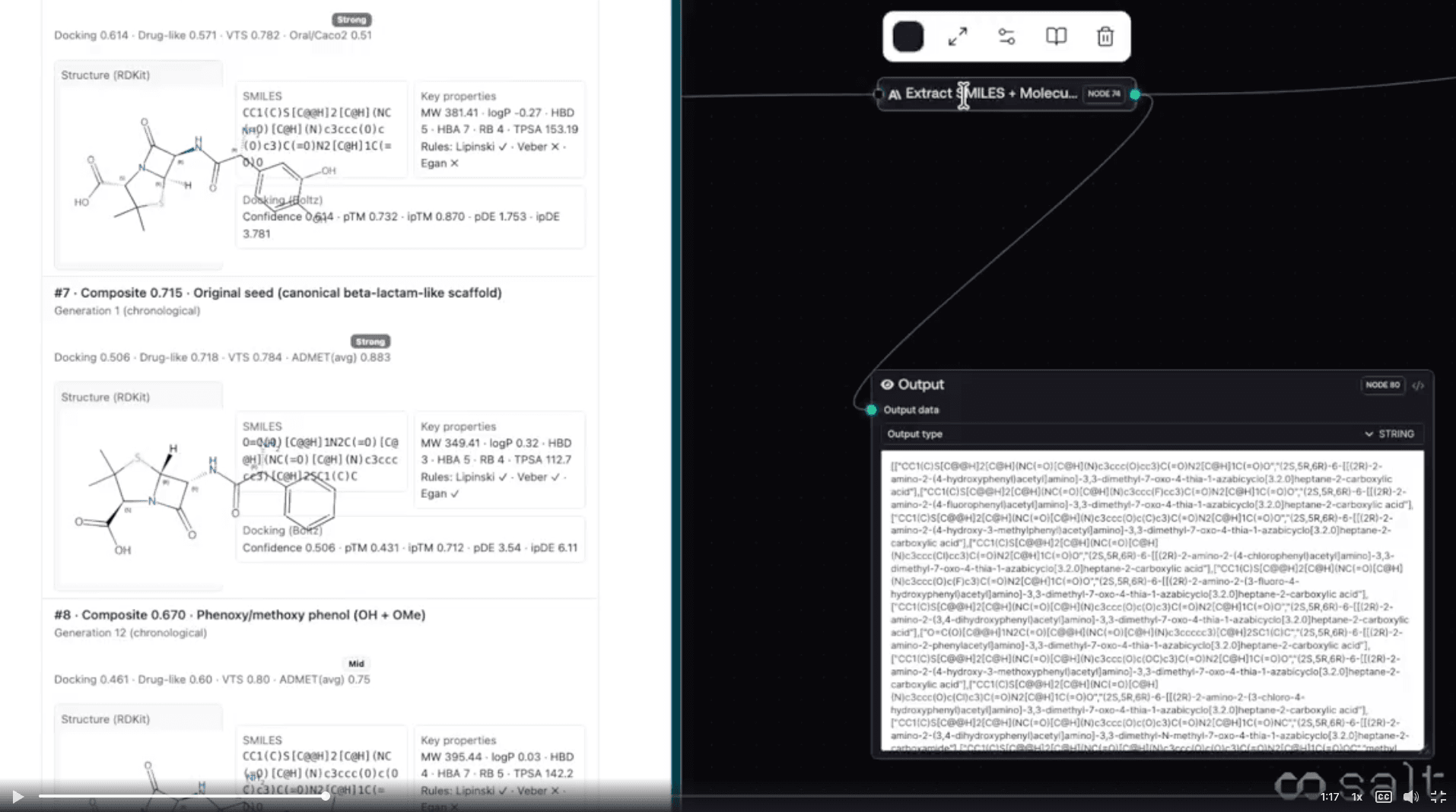
“Our customers are discovering de novo molecules and potential cancer therapies. My goal is to make them successful and compress the timelines that have become the norm—by 10x—with the ultimate goal of curing disease.”
Salt’s infrastructure enables researchers to iterate and test far faster than traditional pharmaceutical cycles.
Solving Data Sovereignty in AI
Salt approaches data security differently than typical SaaS tools.
“If you’ve got information that powers your business, you shouldn’t be sharing it with big model developers. You should own the solutions yourself—that’s what Salt does.”
Salt integrates within customer infrastructure, tapping internal data without letting it leave the firewall—empowering AI use while maintaining total control.
From MySpace to Biotech
Recalling his MySpace days, Whitcomb reflects on scaling nonlinear growth.
“MySpace was the first property to grow nonlinearly. We underestimated it every time—virality is powerful.”
That experience shaped Salt’s architectural philosophy: true scalability takes 10x more engineering than building a prototype.
“Most IP is below the water line,” he says. “You don’t get recognition for it, but that’s where the hard work happens.”
Embracing Skepticism in Science
Whitcomb welcomes doubt from veteran researchers.
“There are skeptics—people designing proteins for 30 years who see AI results and say, that’s never going to work. I embrace that. It raises the bar.”
Salt’s goal isn’t to replace scientists, but to amplify what they can accomplish.
Looking Ahead: Salt OS
“Our product is strong enough now to empower more organizations—anyone who values proprietary data and wants to enable AI for themselves. That’s our principle.”